Agentic AI for CIOs: Benefits, Risks, and Barriers to Implementation
Play Audio Version
In recent months, you’ve probably heard the buzz about agentic AI. The term has gone from a niche technical term to a boardroom hot topic. But what is agentic AI and can it truly deliver on the hype?
What is Agentic AI?
Agentic AI refers to AI systems that resemble digital teammates. Most agentic AI systems are built from large language models (LLMs) that don’t just respond to prompts or codified logic. Instead, agents are involved in setting higher-level goals, planning subtasks, choosing strategies, using tools, and monitoring results. In other words, they can adapt with very little human intervention—they display “agency.”
“If-then” automation and rule-based systems have become the norm in business. But agentic AI systems go beyond the abilities of simple chatbots or generative AI assistants. They don’t require a prompt before each action, and can operate in a larger-picture, goal-oriented way.
Agentic AI gives you a potential digital teammate. Rather than a toy that can help you write text and answer questions, you get a system that can act, monitor, and iterate within parameters.
This newest evolution in AI should give CIOs and enterprise technology leaders reason to sit up and take note. When used strategically and deliberately, agentic AI is a game-changer. It’s all about proper management and deployment.
Some of the ways agentic AI can improve your company’s output are:
- Increased Productivity and Scalability: Agents can run workflows independently. By taking care of back-office tasks such as reconciliations, DevOps monitoring, and customer service triage, your organization can scale operations significantly without increasing headcount.
- Multi-Step Reasoning: Agentic AI systems can take a multi-part goal like “generate next week’s KPI report and email it to leadership” and break it down into small steps, such as fetch data, clean the data, analyze the data, generate a chart, write a summary, and send an email. It’s a level of orchestration far above conventional automation and manual processes.
- Seamless Integration: It’s not unusual for today’s enterprises to run a patchwork of legacy systems, CRM, ERP, and cloud services, which can be hard to make cohesive. Agentic AI can become the glue that unifies by orchestrating across silos, updating systems, triggering workflows, and extracting data-driven insights.
- Less Staff Burnout: Many routine, repetitive, and low-value tasks can be offloaded from people to agentic AI systems. Although the systems are adept at routine tasks, your human teams can focus better on higher-order work—strategy, innovation, and creative thinking.
- Flexibility: Agentic workflows are dynamic and adaptive, allowing your organization to become more proactive. Test new processes and iterate quickly without fully locking actions in place before seeing and measuring potential returns.
Agentic AI offers automation combined with reasoning and adaptability. For CIOs, that means you can rethink and restructure how work gets done to increase efficiency and accuracy across operations and even client-facing functions.
The Barriers to Agentic AI
Full-cycle, enterprise-scale deployment isn’t without challenges. Agentic AI doesn’t (yet) work with plug-and-play magic. There are some serious and important hurdles to consider and strategize around.
Unpredictable Behavior and Risk of Wrong Action
Agentic AI systems decide how to get from point A to B. Because they aren’t relying on a pre-defined task and set of parameters, behavior can diverge from expectations. Some decisions may be logically consistent, but still contextually inaccurate—especially in messy real-world data environments.
The unpredictability means that granting agentic AI systems full access to production systems—like databases, CRM/ERP systems, financial modules, and APIs—is a risky move, especially without tight guardrails in place. If something goes wrong, it can lead to a domino effect of unintended consequences.
Security and Governance Challenges
The use of agentic AI widens your vulnerability because you’re allowing semi-autonomous agents to interact with sensitive data. Some actions may require enterprise-level safeguards, but many of the tools and frameworks for monitoring and governance weren’t designed for agentic AI.
The lag in regulatory and audit frameworks isn’t surprising. Most governance models assume human-led workflows, not AI-driven ones. So, issues like data leaks, corrupted configs, and compliance violations can be harder to prevent and catch when an agentic AI “employee” could trigger them.
Complexity of Integration
Most enterprises rely on a complicated mix of legacy systems, on-premises solutions, cloud-based apps, and custom databases to run operations. Trying to integrate agentic AI, even at its most nimble, is a challenge when navigating a patchwork. Many barriers, such as compatibility issues, the lack of clean APIs, and data silos can crop up during adoption (even if they didn’t during proof-of-concept development).
Often, organizations must rearchitect legacy systems and refactor parts of their infrastructure to create an environment where agentic AI operates reliably. Of course, revamping systems also raises costs and project risks.
Reasoning and Memory Limits
Agentic systems are powerful, but they’re still nascent and imperfect. Agentic AI systems are particularly limited around long-term memory, decision transparency, and reasoning fidelity over extended workflows. As the tasks become more complicated, these weaknesses can become more pronounced.
Agentic AI systems can “lose the thread,” make inconsistent decisions in a process, or mishandle outlying cases. Compounding this issue is the fact that these challenges don’t usually show themselves at first. Everything looks under control during short, scripted demos, making it harder to spot potential problems.
Lack of Clear ROI and Strategic Alignment
Adopting agentic AI requires integration, training, governance, oversight, and, many times, re-architecture of existing systems (particularly because many use cases are still in the exploratory phase). This makes it hard for many organizations to show or predict ROI.
Without a clear, well-defined use case, it’s hard to get full buy-in from management. Without that buy-in, it becomes almost impossible to move forward. Many innovative agentic AI pilots risk being shelved and deprioritized, or cancelled altogether.
Skills Shortage
Another challenge in implementing agentic AI is the need for skilled AI engineers. For a successful rollout, you need alignment between ML-Ops, AI governance specialists, and integration architects—not to mention stakeholder alignment across IT, operations, compliance, and business management. Getting that high level of cross-functional coordination is rare and can also be costly.
Organizations often make the mistake of treating agentic AI like just another DevOps or RPA tool. But in truth, it requires a lot of coordination and creates a big cultural, process, and organizational change. Failing to prepare for the skill requirements and operational restructuring at the level of the endeavor puts even the best agentic AI endeavors at risk of failure.
A Pragmatic Approach to Agentic AI
If agentic AI is the right fit for your organization’s future, there are smart, safe ways to roll out and implement. Like most pragmatic approaches, they are conservative and require a longer timeline, but it’s worth the effort for the payoff of well-implemented agentic AI.
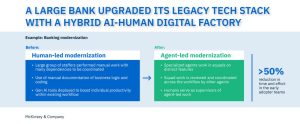
- Begin with Pilot Projects and Hybrid Models: Many of the biggest agentic AI failures are with companies that go “full autonomy” first. We’ve all heard anecdotal examples of rogue AI customer service agents overpromising or over-refunding. It’s essential to start with plenty of human-in-the-loop oversight and limited-scope agents. This allows you to validate and measure value and keep an eye on behavior.
- Sandbox First: Similar to testing pilot projects, it’s best to test in a sandbox before scaling. Run AI agents in isolated environments with limited access to other programs. Give them clear tools and permission boundaries. Test them and audit the results before you introduce anything into your production systems.
- Governance First: From day one, define policies for data access, audit logging, and action traceability. Human accountability plays a significant role in proper agentic AI governance, and it’s important that decisions and parameters align with your compliance, legal, and risk teams from the start.
- Continuously Assess: Don’t lose sight of your organization’s integration complexity. Agentic AI isn’t something you can simply “slot in.” Instead, you should inventory legacy systems, APIs, and data quality, and plan for refactoring.
- Keep ROI and Time Realistic: Agentic AI is in early stages, which means it’s strategic and wise to view it as a multi-year transformation process. Expecting immediate savings or significant increases in efficiency is setting up your organization for disappointment and failure. The value of agentic AI emerges over time with iteration and refinement.
- Invest in Your Team: Upskilling, establishing new roles, and offering clear communication are essential. Agentic AI requires careful change management. You’ll need roles on your team for AI governance and integrators—positions that might be talent-ready within the current team. Looking at agentic AI as a technology investment alone can cost you institutional knowledge and valuable talent you will still need in the future.
Agentic AI is in a “pilot fever” phase. That means many organizations are starting to test the waters. It also means that vendors are positioning and promoting their tools as “agentic.” But true enterprise-grade, scalable, and secure agentic AI deployment is rare.
Many agentic AI projects will likely be abandoned in the near future because of high costs, unclear value, and integration barriers.
But we’re also in the foundational years of agentic AI. Organizations that are strategic in their governance, infrastructure, and investment in agentic AI will be poised to reap many benefits when the systems mature. Standardization will improve, and eventually, agentic AI could reshape your entire operating model.
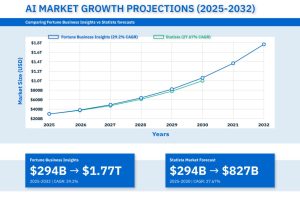
In other words, agentic AI isn’t just another tech trend. It’s actually a shift in the industry from reactive tools and manual workflows to adaptive, nimble, digital teammates. For CIOs, the potential is enormous. As it delivers, productivity, scalability, and dynamic operations will all be part of the payoff.
The smart approach to agentic AI is to treat it as a multi-phase transformation. Use small, well-governed pilots to introduce new endeavors. Rely on hybrid human-in-the-loop workflows for accuracy, and place a strong emphasis on governance, oversight, and risk management.
As with all growth endeavors, it’s important to confirm (and constantly examine) the alignment of agentic AI with your broader business strategy as a whole. Agentic AI isn’t a magic solution, but if handled correctly, it’s a powerful lever and a worthy investment in your organization’s future.
At IBA Group, we help organizations move complex initiatives forward strategically and responsibly. If you’re exploring how agentic AI could support your organization’s goals, we’re here to help you evaluate the path forward.